

Reporting
Tactical rotational allocation model — Reports
The tactical rotational allocation model is a quantitative allocation strategy. What matters is traceability: equity growth, drawdown control, time consistency and operational viability. Here you will find the full metric set in one place —click on any chart to enlarge it—.
Equity evolution versus benchmarks
A direct comparison of the strategy’s compounded growth against relevant benchmarks, with a focus on survival and return quality.
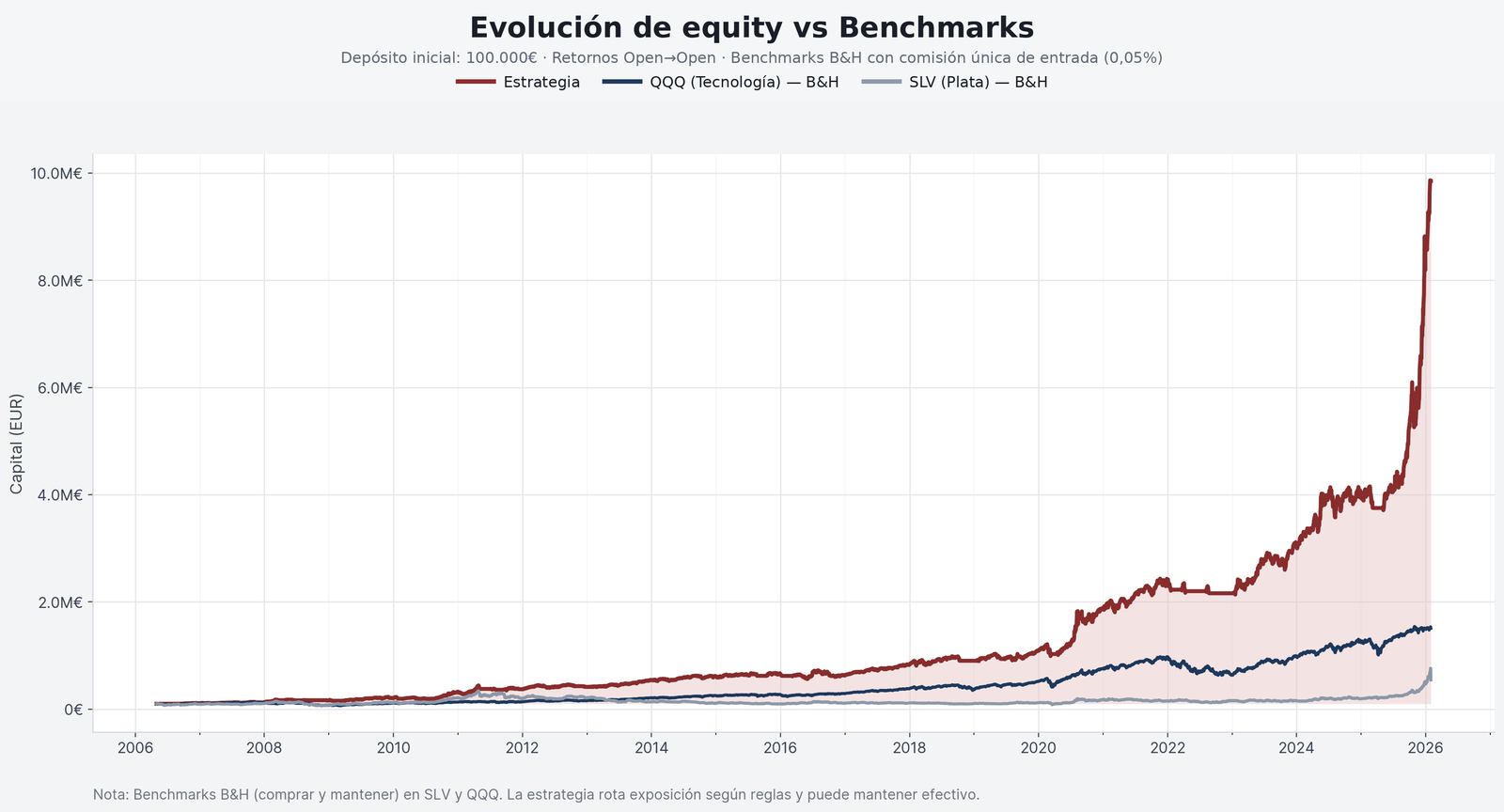

Note: informational/backtest material. It does not guarantee future returns.
Drawdown evolution versus benchmarks
Reading: depth and duration of declines. This is the chart that separates “theoretical” returns from “investable” returns.
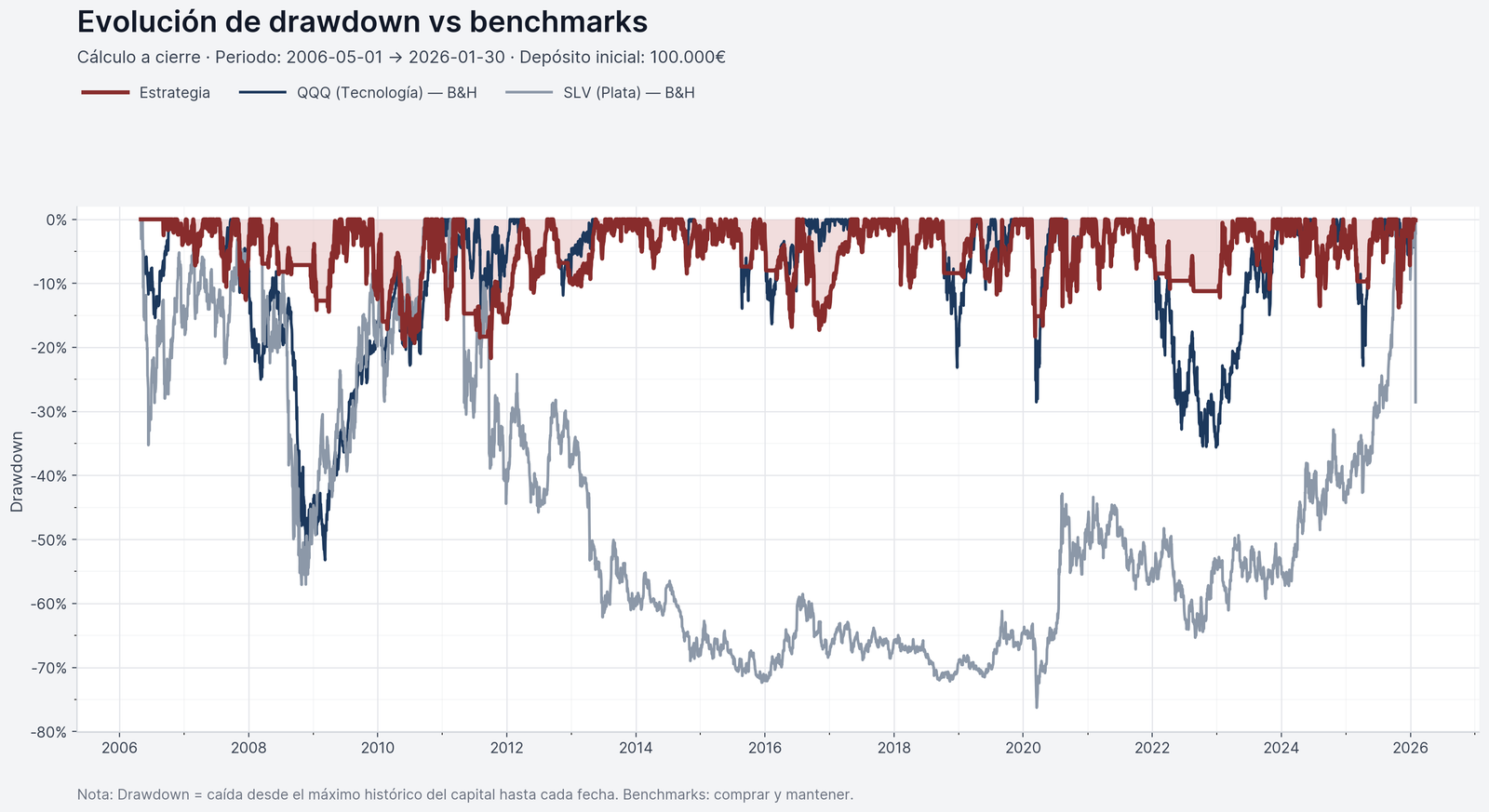

Note: informational/backtest material. It does not guarantee future returns.
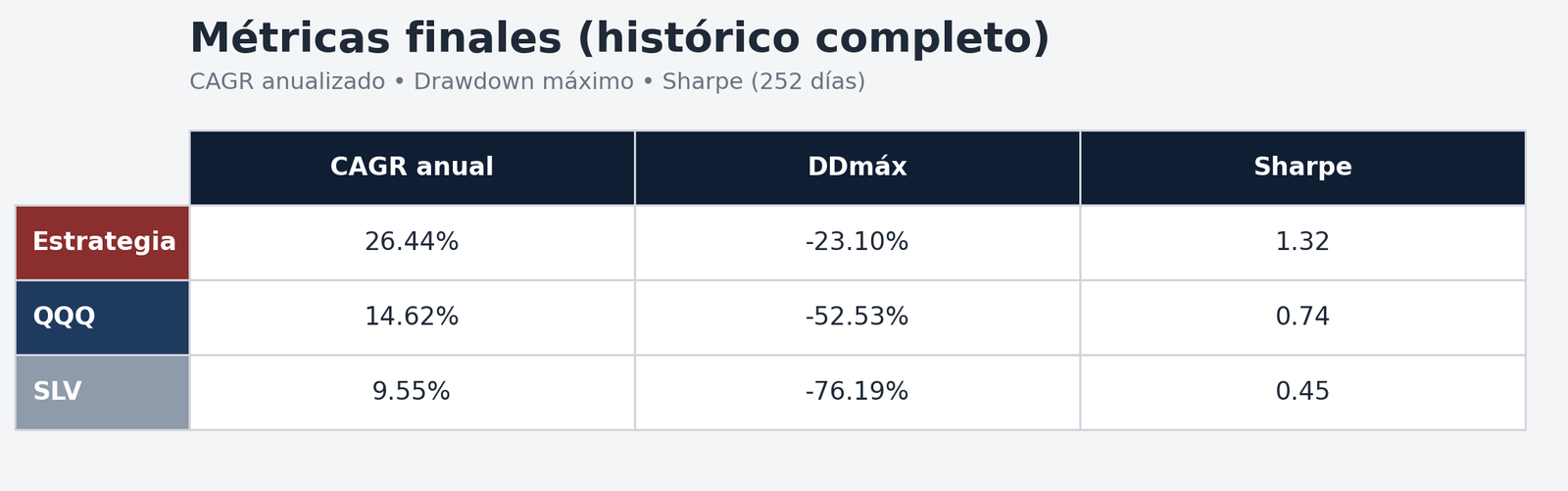
Final metrics summary table
Executive summary for quick review: return, drawdown, ratios and benchmark comparison.
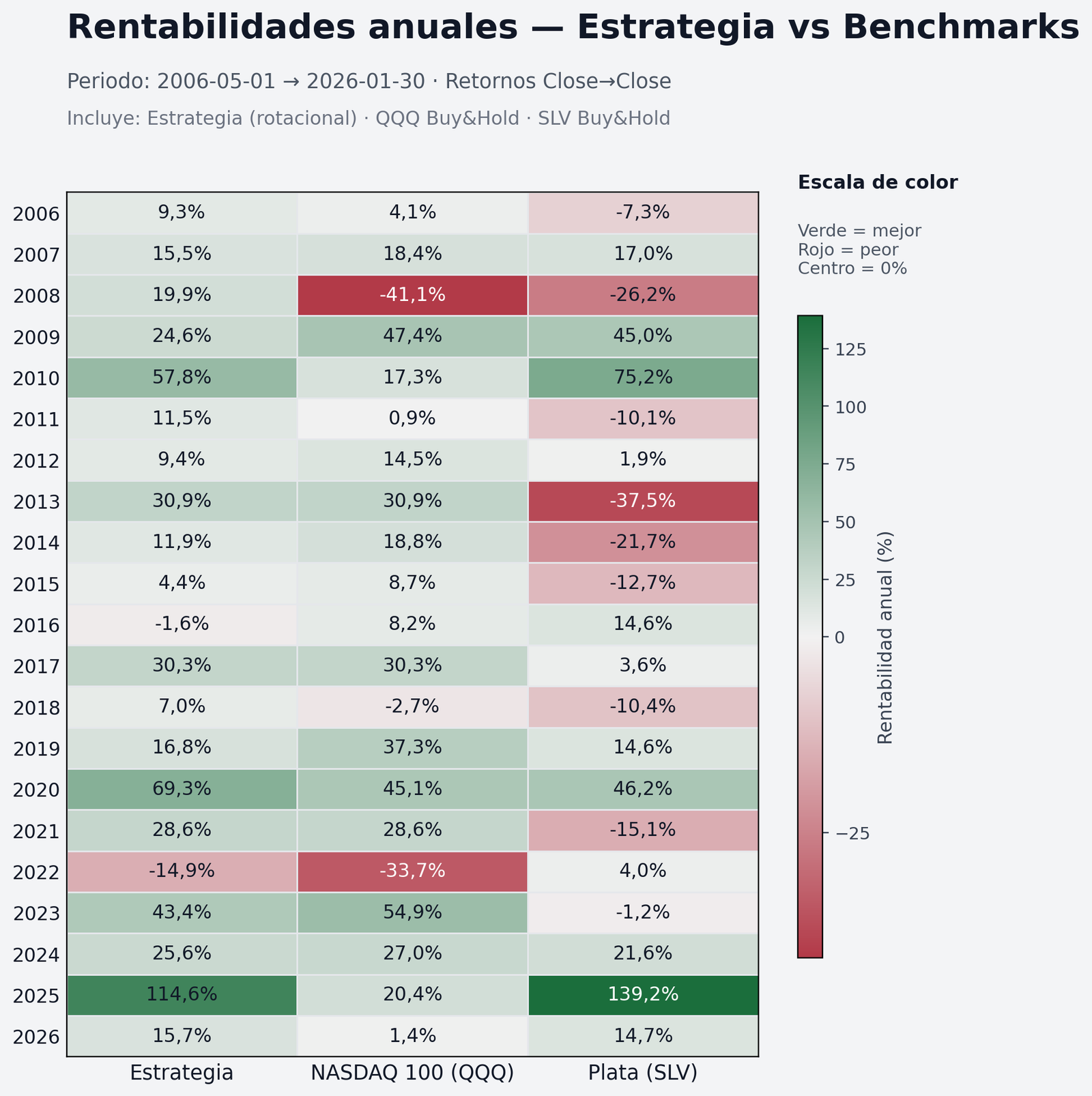
Annual returns heatmap
Annual reading for investment committees: positive and negative years and relative behaviour versus QQQ and SLV.
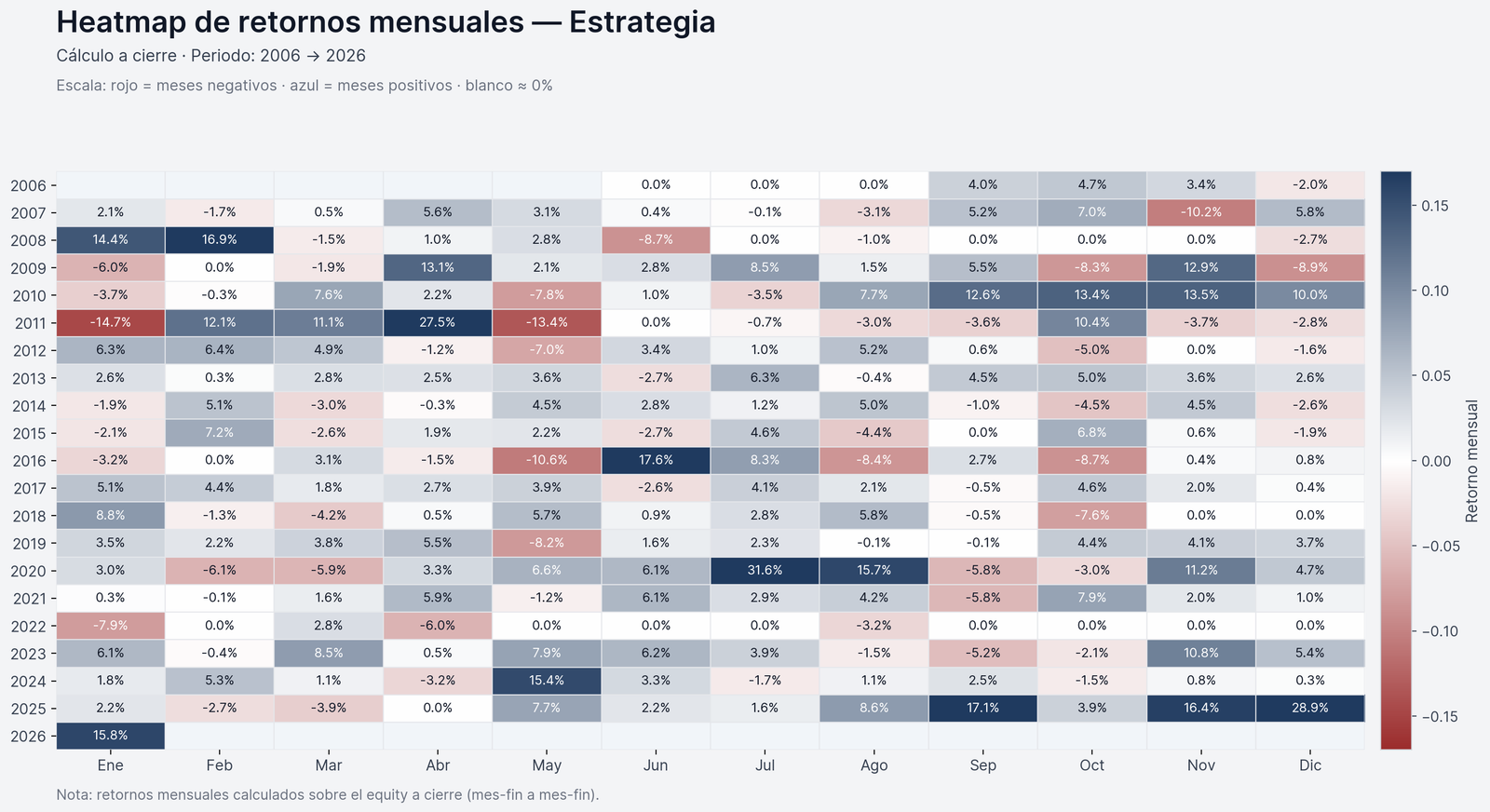
Monthly returns heatmap
Monthly distribution to identify dependence on a few exceptional months and assess regularity.
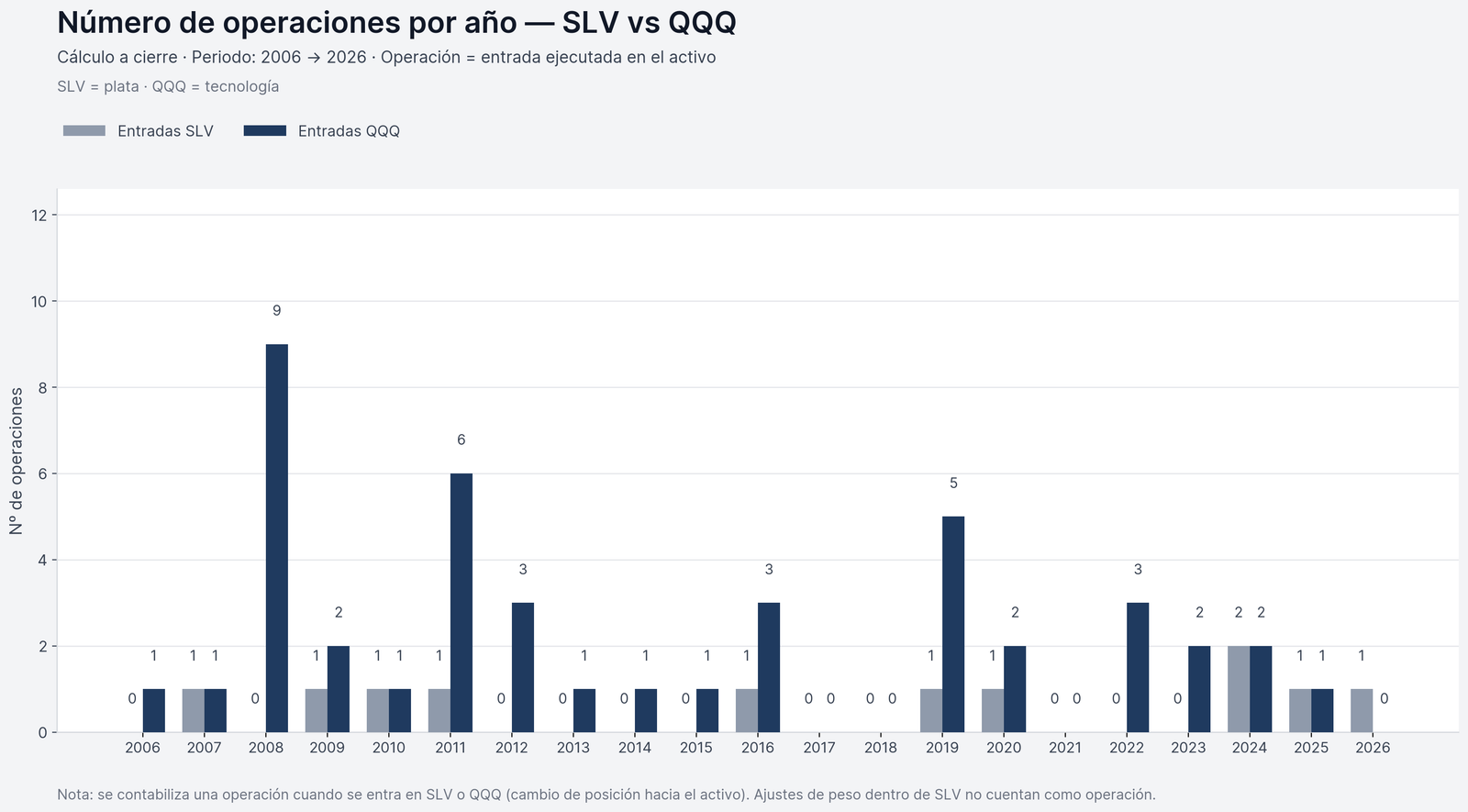
Number of trades per year
Indicator of friction and operational load: annual rotation frequency with a trend-following, non-intraday approach.
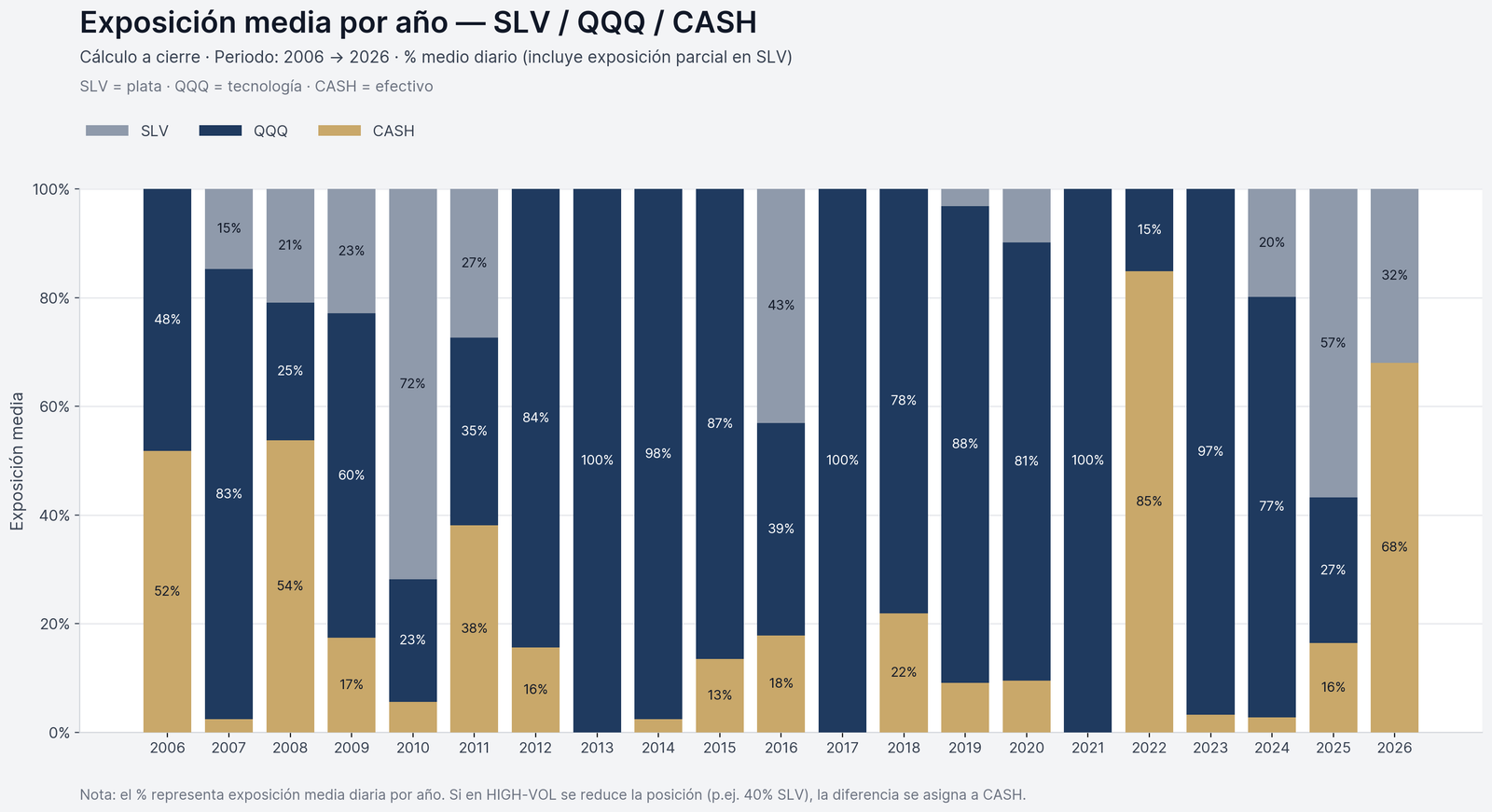
Annual exposure — QQQ / SLV / CASH
Regime-based reading: time spent in each state to validate the defensive positioning in CASH and the tactical rotation into SLV.
Request verified access to the dashboard and the reporting pack for investment committees.
Important information
Legacy Allocation is a quantitative analysis tool for informational and educational purposes only. It does not constitute personalised advice, nor an offer or solicitation to buy or sell financial instruments. Legacy Allocation does not provide financial advisory services and is not an entity registered with or supervised by the CNMV. Simulator: results are based on historical data or simulation. Static series updated until February 10. The user is responsible for the use of this information and for their own decisions.